

Partner David L. Attanasio provided an overview at World Arbitration Update in Bogota, Colombia of the likely climate-related international arbitrations that may emerge from Latin America in the near and mid-term. The following is a report of the remarks he delivered in Spanish on May 5, 2026—as part of a panel entitled “Mining, Renewables, and Oil & Gas: Climate Disputes in the New Energy Economy.”
Our topic concerns climate disputes in international arbitration—a timely and important subject. But what exactly is a “climate dispute”? Which climate disputes are occurring in Latin America? And which ones are likely to emerge next?
Examples of the most obvious category of climate disputes—claims challenging State measures designed to mitigate climate change—have already appeared in Europe. But Latin America may well experience a different profile of climate disputes. The region’s electricity sector is already heavily renewable, many governments remain economically dependent on hydrocarbon exports, and the energy transition is creating new commercial and investment relationships across power generation, transmission, storage, and mining.
Under these circumstances, climate disputes in the region may arise less from direct challenges to climate policy and more from the broader economic transformation that the climate policy is accelerating.
Regulatory Measures in Response to Climate Change: The Limits of the European Analogy
As noted, the first category of climate-related disputes that likely comes to mind covers those disputes triggered by State regulations designed to reduce greenhouse-gas emissions or phase down fossil fuel use. Europe has already produced examples of this type of dispute. That model, however, may not translate neatly into Latin America.
The best-known examples of such disputes come from the Netherlands. A couple of cases arose from a 2019 law that phased out coal-fired power over a ten-year period. Companies operating those plants launched investor-State arbitrations, although the cases were discontinued before awards were issued. Such disputes are plainly climate-policy related. But they are not the type of disputes seen, at least so far, in international arbitrations involving Latin America.
Are these the kinds of cases we are likely to see in the future in Latin America?
Recent legal developments might seem to suggest that they are. The Inter-American Court of Human Rights—with its continuing legal influence in the region—has underscored States’ obligation to mitigate climate change. In July 2025, it issued its Advisory Opinion on Climate Emergency and Human Rights. It brings themes from the UN Framework Convention on Climate Change and the Paris Agreement a step closer to the region.
One of the major conclusions from this Advisory Opinion seems to support measures that could put States in conflict with investors in the hydrocarbon sector. The Advisory Opinion states:
To protect the global climate system and prevent human rights violations resulting from its alteration, States are obliged to mitigate their GHG emissions. This requires them not only to limit emissions from human activities within their jurisdiction, but also to protect the carbon sinks within it.
However, the Advisory Opinion also adds:
[T]he scale of each State’s mitigation should be determined based on: (i) its current and historical cumulative contribution to climate change; (ii) its capacity to contribute to mitigation measures and, finally; (iii) the actual circumstances.
Because Latin American States are not the primary historical or current drivers of carbon emissions, that reasoning appears to lessen—based on the Inter-American Court’s apparent view—the case for the most drastic measures to combat climate change. Even so, the Court’s position is that Latin American States must still take meaningful action.
Despite such legal developments, there are reasons to wonder to what extent Latin American governments will actually adopt relevant measures that generate international arbitrations. Latin American energy consumption is already heavily renewable, especially in the power generation sector—less so in transportation. Across the region, about 65% of electricity comes from renewables, with hydropower accounting for around 45%. That leaves less room for conflict driven by climate policy alone.
Of course, Latin America is well known for hydrocarbon production—oil, gas, and coal. When thinking about the potential for regulatory disputes, we need to separate energy consumed domestically from energy produced for export. Hydrocarbon production for export underwrites State budgets—and in many countries, it does so substantially. It is one thing for governments to adopt policies that reduce domestic consumption; it is another to reduce production for export, especially when that production matters to the economy and the public budget.
These considerations raise practical questions: how many governments in the region will embrace opposition to oil and gas production, given the budgetary consequences? How many governments will conclude that they should bear the costs of a problem driven far more by the United States, Europe, and China? How likely is it that they will try to shut down existing projects, thereby provoking disputes like the ones seen in Europe?
While it is in the realm of possibility that some Latin American governments could curtail hydrocarbon activity, it is far from obvious that they would do so in such a way that generates a significant volume of investor-State cases.
Withdrawal of Renewable Incentives: Likely Divergence from Europe’s Past
A second category of regulatory disputes involves the withdrawal of incentives for renewable-energy projects. Europe’s renewable-energy cases remain the best-known and oft-discussed examples and offer a cautionary tale. These cases concerned incentives for solar energy projects—feed-in tariffs and the like—created in the first decade of this century and withdrawn more than a decade ago. Many investor-State arbitrations followed.
A comparable wave of disputes in Latin America appears less likely today, however. Since the European renewables disputes arose, the cost of renewable-energy projects has fallen substantially, renewables have reached grid parity with other power sources in many markets, and States have become more alert to the risks of creating—and later withdrawing—investment incentives. Spain’s experience with over fifty investor-State arbitrations concerning the withdrawal of renewable incentives has made that risk difficult for governments to ignore.
So, it does not seem especially likely that we will see a great wave of such cases in Latin America.
Climate-Related Disputes Beyond Climate Policy: The Underappreciated Category
The regulatory disputes addressed so far—both regarding measures to mitigate climate change and regarding renewables incentives—are fixtures in discussions of climate-related disputes. Those working in the field of international arbitration often focus on investor-State disputes because they are public, easy to track, and tend to present familiar issues again and again.
We should, however, not think about climate-related disputes solely in those terms. That would be a mistake. Instead, to understand where climate-related international arbitration is heading in Latin America, we should consider how climate change—and the regulatory responses to it—will reshape the region’s energy and mining industries.
Some segments of these industries will expand, while others will contract. Although the future is always uncertain, the rough outlines of likely change can be identified. Disputes—especially the routine commercial disputes that result from the everyday friction of doing business—tend to follow economic activity. We often overlook these cases because so few of them are public, but they are a critical part of our field. A sector that attracts new investment, new infrastructure, and new contractual relationships is likely to generate disputes among project companies, developers, suppliers, contractors, service providers, offtakers, and customers.
Moreover, beyond purely commercial arbitrations, industry shifts driven by climate change can also generate more investor-State disputes in the affected sectors—even where those disputes are not directly about climate policy.
So what changes are we likely to see in Latin America?
The International Energy Agency projects that renewable energy in Latin America will continue to grow in the coming years from a base of about 65% of electricity generation in 2025. Most new capacity is anticipated to come from photovoltaic solar and wind, not from additional hydropower. Natural gas is expected to remain relatively stable. Coal and oil are expected to decline rapidly as power sources. Total electricity demand is also expected to grow, and at a significantly faster rate than in the past decade.
These regional trends, combined with global dynamics, indicate the potential for climate-related international arbitrations regarding, among others, wind/solar power, hydroelectric power, electric grids, and mining.
Wind and Solar Power: The changing generation mix means new solar and wind projects—and fewer new gas, coal, and oil plants. The expansion of solar and wind, in turn, means a web of new commercial relationships among project companies and developers, landowners (private or public), power offtakers, EPC contractors, equipment suppliers, operations-and-maintenance providers, and others. Each of those relationships has the potential to generate international arbitration—as they already have in the region.
Hydroelectric Power: As mentioned above, hydropower generates around 45% of the region’s electricity. Although the sector is not expected to grow significantly, it will remain dominant. We should therefore expect future disputes in this area. For example, the recent domestic arbitration Hidroeléctrica Ituango v. Empresas Públicas de Medellín concerned delays in the construction of the Ituango dam.
Electrical Grid: Rising electricity demand, together with larger shares of wind and solar power, also requires investment in grid expansion and modernization, as well as battery storage. That creates the potential for disputes involving concessions and permits, EPC contracts, operations, maintenance, and customer relationships.
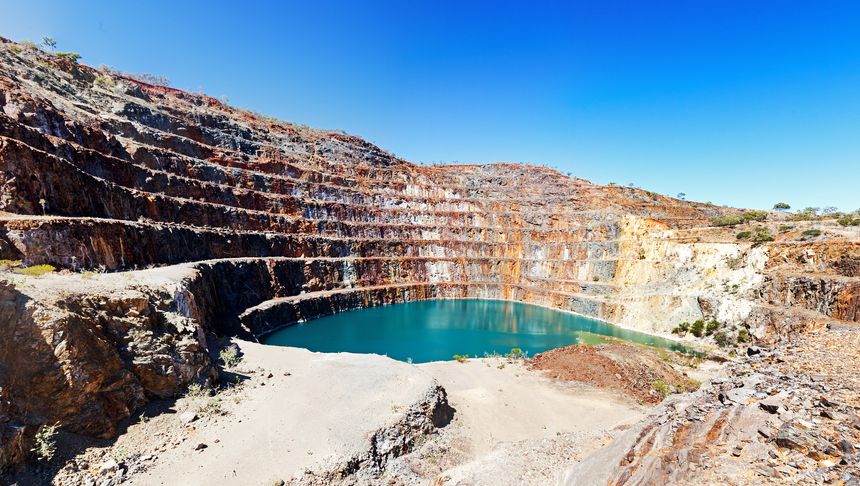
Mining: Further upstream in the value chain, greater electrification and more renewables will increase demand for primary materials—both within and beyond the region. In practical terms, that means more mining. According to the International Energy Agency, “[t]he region has a third or more of the global reserves for lithium [and] copper.” Lithium is a key input for battery storage systems that allow solar power to be used at night and help smooth periods of low wind generation. Copper is critical for power grids. Production of these and other minerals is expected to grow in the region.
With expanded mining, a corresponding increase in the full range of associated disputes may be expected—from purely commercial cases to investor-State claims with no direct connection to climate change regulation.
The Road Ahead
Climate-related disputes and international arbitration in Latin America should thus be understood broadly, extending well beyond the regulatory disputes that have attracted so much attention in Europe. Direct challenges to climate regulation may emerge in Latin America, but they are less likely to be the whole story or even most of it. Many of the region’s climate-related disputes may instead arise from commercial contracts, concessions, permitting decisions, infrastructure projects, and mineral supply chains that will define the energy transition. In that sense, climate-related arbitration in Latin America may prove to be less about climate policy alone and more about the legal consequences of a changing energy economy.
How Womble Can Help
Womble Bond Dickinson has top-shelf international arbitration practitioners who relentlessly think past the obvious solutions to identify optimal responses for the challenges confronting cross-border businesses. We routinely collaborate with foreign legal practitioners to provide our clients with critical insights grounded in local expertise. We encourage you to reach out for a consultation regarding your strategy for navigating the Latin American disputes landscape.
/Passle/69727c48ed6945742038760b/SearchServiceImages/2026-07-13-19-15-38-913-6a55395a26441e68e3de3105.jpg)
/Passle/69727c48ed6945742038760b/MediaLibrary/Images/2026-05-05-15-06-46-139-69fa078645081dc81131662a.jpg)
/Passle/69727c48ed6945742038760b/SearchServiceImages/2026-06-23-14-31-47-959-6a3a98d3117422070cd56424.jpg)